 Emerging Tech
Augmented Reality in Retail: Bridging Physical and Digital
See how AR is enhancing customer experiences in stores and online, from virtual try-ons to interactive displays.
Retailers are using AR to create immersive shopping experiences. Whether it is trying on clothes virtually or visualizing furniture in your home, AR is helping brands connect with customers in exciting new ways.
The Rise of Augmented Reality in Commerce
Augmented reality technology is fundamentally transforming retail by enabling customers to try products before they buy, addressing one of the biggest pain points in e-commerce. Rather than purchasing a piece of furniture without knowing how it will look in their home, customers can use sophisticated AR applications to visualize furniture in their actual living space. Fashion retailers allow customers to try on clothes and accessories virtually, significantly reducing return rates and customer dissatisfaction. Beauty brands enable customers to see exactly how makeup will look on their face before making a purchase. These applications address one of the biggest pain points in e-commerce: the inability to physically interact with products before purchasing. As smartphone capabilities continue to improve and AR technology becomes more sophisticated, AR applications in retail will become increasingly mainstream and expected. Early adopters are seeing competitive advantages through improved customer satisfaction and substantially reduced return rates. Brand trust increases when customers feel genuinely confident about purchases before completing transactions. Reduced returns lower logistics costs measurably. Multi-angle views show product details clearly. Comparison features help evaluate variations.
Virtual Try-On Technology
Virtual try-on represents one of the most commercially successful AR applications in retail. Makeup brands use sophisticated AR to let customers visualize products on their face before purchasing. Fashion brands apply similar technology to clothing and accessories. Frame fitting technology enables eyewear retailers to show exactly how specific glasses will look on customers' actual faces. Footwear retailers use AR to visualize shoes on individual feet. These applications use facial recognition, body mapping, and other computer vision technologies to accurately overlay virtual products on customers. The accuracy and realism of these applications have improved dramatically, creating convincing experiences that substantially reduce purchase anxiety. Companies using virtual try-on technology report significantly lower return rates and higher customer satisfaction. The investment in developing or implementing these AR capabilities often pays for itself through improved conversion rates and reduced logistics costs associated with returns. Size virtualization helps with fit selection. Color variations are easy to visualize. Multiple styling options can be tested. Sharing features enable social recommendation. Personal preference tracking saves choices.
In-Store AR and Physical Retail Enhancement
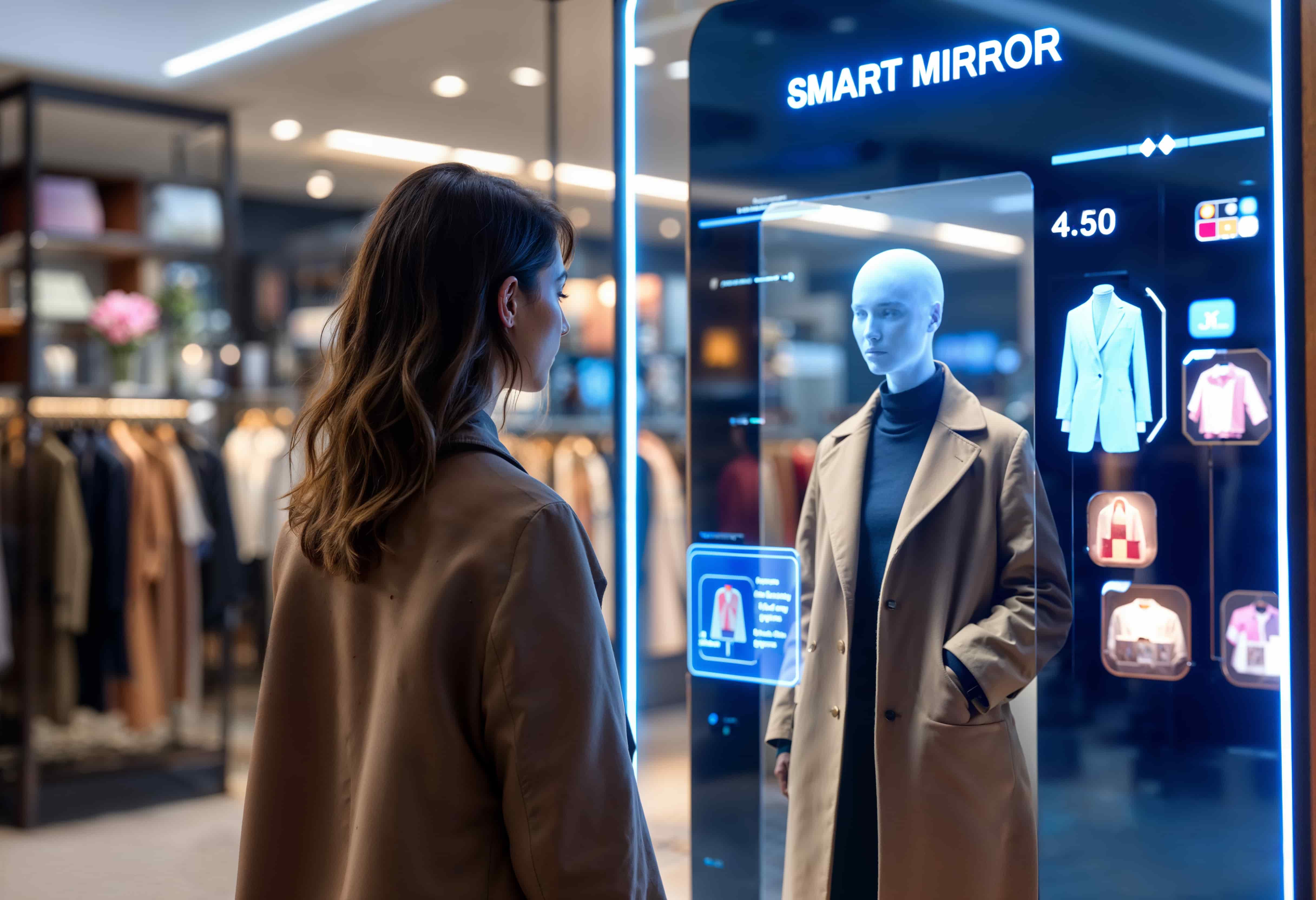
AR is not just for online retail; it's also significantly enhancing experiences in physical brick-and-mortar stores. Augmented reality mirrors in fitting rooms can show customers different styles or colors without changing clothes. In-store AR applications can provide additional product information, customer reviews, and personalized styling recommendations. AR-powered product visualization helps customers visualize how products will look in their homes or on their bodies. Interactive displays using AR can create engaging brand experiences that drive foot traffic and increase dwell time in stores. Some retailers use AR to navigate customers through stores, highlight promotions, and provide personalized recommendations based on browsing history. These in-store AR applications bridge the gap between purely digital and physical retail, creating seamless omnichannel experiences that work effectively across touchpoints. Retailers who implement in-store AR effectively report increased engagement and higher average transaction values. Smart mirrors with AI styling assistance provide personalized recommendations. Location-based offers drive immediate purchases. Product information displays educate customers. Social sharing features amplify reach.
Interactive Product Visualization
AR enables customers to visualize products in ways that static images or even video cannot match. 3D product models that customers can rotate, manipulate, and visualize in different environments create a deeper understanding of product design and functionality. Furniture retailers use AR to show exactly how pieces will look in actual living spaces. Car manufacturers let customers see vehicle options with different paint colors, wheel options, and interior configurations. Appliance retailers visualize products in actual kitchens showing scale and fit. These immersive visualizations build customer confidence and reduce purchase hesitation. They provide objective information that helps customers make better purchasing decisions. The detailed technical information conveyed through AR visualization often reduces customer support inquiries significantly. As AR becomes more prevalent, customer expectations for this level of product visualization will increase, making it a competitive necessity. Environment lighting detection makes visualizations more realistic. Measurement tools help verify product dimensions. Size comparison aids scale understanding. Customization preview shows options. Assembly visualization aids understanding.
Challenges and Future Development
Despite its promise and potential, AR in retail faces several significant challenges. Not all customers have devices capable of running sophisticated AR applications. Creating high-quality 3D product models is time-consuming and expensive. AR applications can be technical and potentially difficult to use for non-technical customers. Accurate product visualization requires excellent lighting conditions and positioning. However, these challenges are being actively addressed through technological advancement and increased investment. Smartphone hardware improvements enable more sophisticated AR applications. Cloud-based AR solutions reduce the processing burden on individual devices. Improved lighting detection and tracking algorithms increase accuracy. Training and better user interfaces make AR applications more accessible. As technology improves and adoption increases, AR will become standard in retail. Companies that invest in AR capabilities and expertise today will maintain competitive advantages. Browser-based AR eliminates app download friction. Improved device compatibility expands reach substantially.